远东—中东航线运价因货量与港口拥堵攀升
Cargo surge and port congestion drive up Far East-Middle East rates
Container Trades Statistics 数据显示,远东—中东及印度次大陆航线运价涨幅为今年集装箱航运主要航线最高,指数较年初上涨 250%,9 月环比上涨 25%;大中华区至中东指数升至 392,环比上涨 15.5%,但年初至今货量下降 12%。SCFI 上海—迪拜航线 40 英尺即期运价在 10 月维持在 6,500 美元上限,较 2025 年 10 月底的 1,630 美元上涨约 300%。9 月货量激增令霍尔木兹海峡外的 Fujairah 和 Khor Fakkan 出现拥堵,部分班轮公司暂停接收发往这两港的订舱;Maersk 称 10 月使用沙特 Jeddah 红海港口作为替代门户的货量增加,并预计延续至 11 月。
运价上涨与货量走势分化,年初至今货量下降 12% 而指数仍升 250%,说明旺季抢运与港口拥堵共同推高该航线即期价格。
10 November 2026
Freight rates from Asia to Gulf economies trapped behind the straits of Hormuz hit unprecedented highs during this year’s peak season as importers rushed to get cargo into the region, prompting another wave of port congestion.
According to new data from Container Trades Statistics (CTS), prices on its Far East-Middle East & Indian subcontinent corridor showed the highest growth in freight rates of any major lane in container shipping so far this year.
“It’ll be no surprise that the big price index increase is Asia to India and the Middle East, where the index is up 250% since the beginning of the year and 25% month-on-month – so September’s seen a resurgence of the price there and we’re seeing some very strong prices,” CTS chief executive Nigel Pusey tells The Loadstar’s podcast today.
The last pricing data came after volumes on the route rebounded during September for the first time since the onset of conflict in the region.
“From Greater China to the Middle East, September was a bit of a boom month of volumes – China to Middle East was actually above this time last year for the first time since January and February.
“I suspect that will fall back, but what has just kept forcing its way through to the top is the price they’re paying to achieve it. We are now at a price index from Greater China to Middle East of 392, which is up 250% on the beginning of the year.

Source: Container Trades Statistics
“We have a month-on-month increase of 15.5%, despite the fact that year-to-date volumes are down 12%.
“So, at the moment, what we’ve seen is a surge of cargo in late August, early September with prices to match, although I think that will drop off in October because the attacks did come back in that early part of the month.

Source: Container Trades Statistics
According to the latest spot rate data as per the Shanghai Containerised Freight index (SCFI), freight rates appear to have hit a ceiling of $6,500 per 40ft on the SCFI’s Shanghai-Dubai leg and held at that level throughout October.
However, that is some 300% up on the $1,630 per 40ft recorded at the end of October 2025.
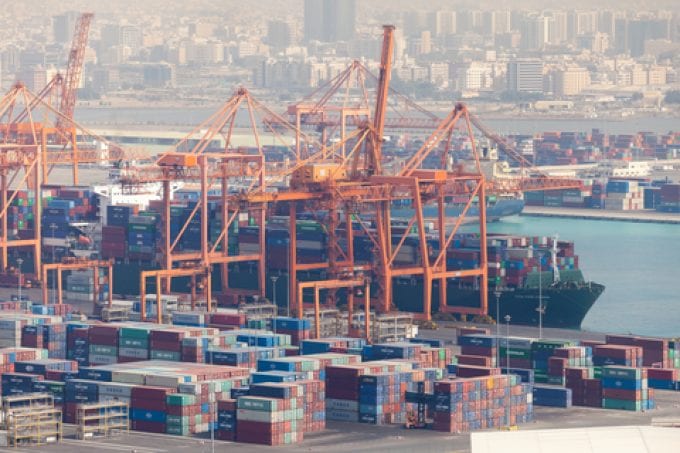
Meanwhile, the September surge has created some port congestion in the region, particularly at the two main ports immediately outside Hormuz – Fujairah and Khor Fakkan – which have acted as the chief landbridge gateways for GCC importers.
Linerlytica reported last week that MSC had included a call at Khor Fakkan on a new Far East-Middle East service deploying 24,000 teu ships, “despite severe berthing delays”.
“Port congestion at Middle East ports has surged to a record high,” Linerlytica added, and Mr Pusey said he expected to see liner networks flex to cope with the congestion.
“I think there’ll be some deviations. I’ve noticed one or two lines have stopped even serving cargo into Khor Fakkan and the Fujairah, which suggests that the place is getting very congested because people are trying to rush cargo through,” he told The Loadstar.
“They’re now saying, ‘Well, we’re going to stop bookings whilst we just take a bit of a breather’, and I don’t usually use my crystal ball too much, but I’m pretty sure that’s what’s going to happen in October and early November.”
In general, the use of Khor Fakkan over Fujairah has divided the liner industry into two broad camps – with MSC and the Gemini partners Maersk and Hapag-Lloyd opting for the former, while CMA CGM and its Ocean Alliance partners have their services concentrated in Fujairah, with both ports hosting increasing numbers of smaller Asian and Middle East regional carriers’ services.
Meanwhile, Maersk said shippers were returning to using the Saudi Red Sea port of Jeddah as an alternative gateway to Gulf destinations.
“Use of the Saudi Landbridge increased during October as evolving conditions at Khor Fakkan and disruption linked to the Strait of Hormuz led customers to explore alternative routings into Saudi Arabia and the wider Gulf,” a Maersk statement said.
“Interest is expected to continue into November, particularly when customers are seeking to reduce exposure to disruptions affecting port and shipping connections” it added.
“The trend also highlights the value of coordinating ocean and landside planning across customer’s chosen service providers.
“However, capacity, border processing and onward delivery requirements should be confirmed for each shipment before routing decisions are finalized.”
来源:The Loadstar · theloadstar.com