Gemini 承运人计划 1 月中旬全面恢复苏伊士通行
Gemini carriers target complete return to Suez transits by mid-January
Gemini Cooperation 成员 Maersk 与 Hapag-Lloyd 计划到 1 月中旬全面恢复亚洲-欧洲航线的苏伊士运河通行。最后三条仍绕行好望角的亚洲-北欧航线将分批切换:AE2/NE1 于 12 月 4 日由 Mary Maersk 从宁波出发恢复双向苏伊士通行,船舶数从 14 艘减至 13 艘;AE3/NE3 于 12 月 20 日由 Alette Maersk 从上海出发恢复西行苏伊士通行,船舶数从 13 艘减至 11 艘;AE1/NE2 于 1 月 14 日由 Damietta Express 从上海出发恢复西行苏伊士通行。Xeneta 数据显示,9 月亚洲至欧洲仅 4% 船舶准时抵达,10 月升至 7%;近 600,000 teu 此前被好望角绕行占用的运力已释放,首席分析师 Peter Sand 认为全面复航可能使明年运价大幅下跌,但红海安全局势恶化也可能迫使承运人重新绕行。
Gemini 三条亚洲-北欧航线分批复航苏伊士,同时减少投入船舶,运力释放与准班率低迷并存,运价走向取决于红海安全局势。
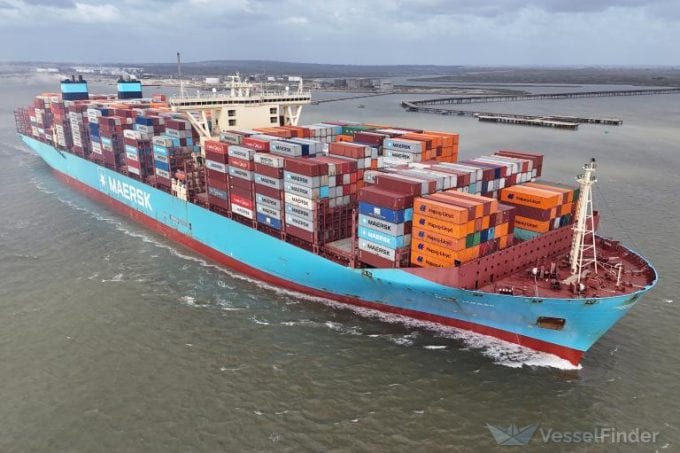
Photo: VesselFinder
17 November 2026
Gemini Cooperation partners Maersk and Hapag-Lloyd will have made a full resumption of Suez transits on their Asia-Europe services by mid-January.
Yesterday, the partners outlined the schedule for the last three Asia-North Europe services still detouring via the Cape of Good Hope to return to the Red Sea routing.
The Asia-Northern Europe Loop 1 (Maersk AE2/Hapag-Lloyd NE1) will resume Suez transits in both directions with the departure of the 18,300 teu Mary Maersk from Ningbo on 4 December.
Currently the vessel is returning to Asia having just completed a southbound Suez transit, according to AIS data.
The new pro forma port rotation will be Ningbo-Shanghai-Tanjung Pelepas-Suez Canal-Rotterdam-Wilhelmshaven-Bremerhaven-Rotterdam-Suez Canal-Salalah-Singapore-Ningbo, while according to Xeneta’s eeSea liner database, the switch in routing will see the number of ships on the string reduced from 14 to 13.
The Asia-Northern Europe Loop 3 (Maersk AE3/Hapag-Lloyd NE3) will also fully resume westbound Suez transits following the departure of the 16,300 teu Alette Maersk from Shanghai on 20 December.
That switch will see the number of ships deployed reduced from 13 to 11, and feature the following port rotation: Shanghai-Yantian-Tanjung Pelepas-Suez Canal-London-Gothenburg-Aarhus-Rotterdam-Southampton-Suez Canal-Singapore-Shanghai.
Meanwhile, shippers on the Asia-Northern Europe Loop 2 (Maersk AE1/Hapag-Lloyd NE2), operated entirely by Hagag-Lloyd vessels, will have to wait until early 2027, with a full westbound resumption beginning with the departure of the 23,700 teu Damietta Express from Shanghai on 14 January, representing the last of Gemini’s Asia-Europe strings to return to Suez.
The vessel is currently steaming northbound along the west coast of Africa on its final Cape routing before reverting to the new pro forma rotation, which will be: Shanghai-Yantian-Tanjung Pelepas-Suez Canal-Rotterdam-Hamburg-Antwerp-London-Tangier-Suez Canal-Singapore-Shanghai.
“The Suez Canal is a vital maritime corridor between east and west, and a key driver of efficient global supply chains,” Maersk said in a customer advisory. “The route through the Suez Canal and Red Sea is the fastest, most sustainable, and most efficient way to serve customers with transport between Asia, Europe and the Middle East.
“By transitioning the AE1, AE2, and AE3 to the trans-Suez corridor instead of sailing around the Cape of Good Hope, we will offer more efficient transit times for customers,” it said, adding that it would continue to monitor the security situation in the region, which remains in a state of considerable flux.
It also remains to be seen how the widespread return to Suez routings will impact Asia-Europe schedule reliability, which according to Xeneta data, has fallen to historic lows – just 4% of vessels arrived on time in Europe ex-Asia in September, which rose to 7% in October.
Xeneta data also revealed that nearly 600,000 teu of capacity that had previously been tied up in Cape of Good Hope deployments has already been “released” by Suez returns, and chief analyst Peter Sand predicted this could result in a steep drop in freight rates next year.
“The Red Sea is pivotal to ocean container shipping in 2027 because it offers both sides of the coin,” he told delegates at Xeneta’s annual summit in Munich last week. “If there is a full return, freight rates could plummet.
“We could also be faced with the opposite extreme if a deterioration in the security situation in the Red Sea forces carriers to revert to Cape of Good Hope diversions.
“This would bring chaos to ocean networks and upward pressure on rates.”
And he added: “The significant ramping up of Red Sea services in recent months should not distract from the fragility of the geo-political situation in the wider Middle East – it will not take much to ignite the situation again and then the house of cards comes falling down.”
来源:The Loadstar · theloadstar.com